‘Cold’ Hard Business: How Cole Palmer Trademarked His Celebrity

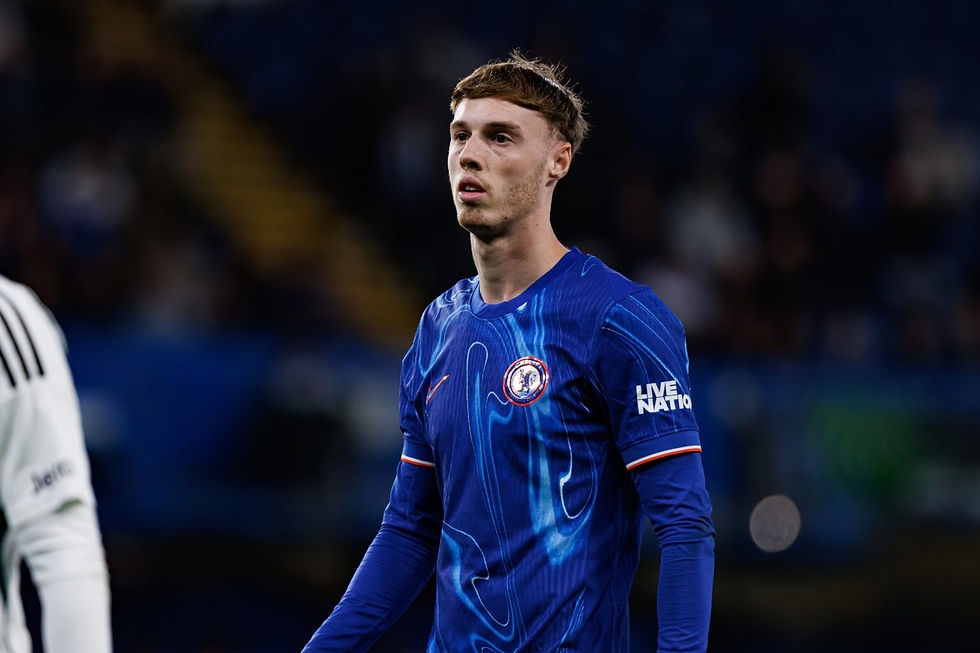
On the pitch, it’s no doubt that Cole Palmer has been an absolute revelation for both Chelsea and England. He is a player defined by his calm, lethal precision, a skill set that has fittingly earned him the nickname “Cold Palmer.” Now, in a move that demonstrates the new level of commercial savvy amongst modern professional footballers, Palmer is ensuring that his flashy on-field persona smoothly translates into a protected, off-field financial empire.
Over the past few weeks, the twenty-three-year-old superstar has paired victories on the pitch with wins at the UK’s Intellectual Property Office (IPO). Palmer’s first move was to successfully trademark his “Cold Palmer” namesake before now reportedly acquiring an even more ambitious intellectual property right: his signature “shivering” goal-scoring celebration.
Palmer’s aggressive and layered trademark strategy suggests a significant shift in how athletes consider their personal branding. In growing numbers, players are now turning their sights beyond endorsement deals towards owning the very assets that drive their market value.
Building the ‘Cold Palmer’ Brand
Filed through his company Palmer Management Limited, Palmer’s first big-time move was securing the rights to his nickname. The “Cold Palmer” application, which was recently approved, grants the midfielder exclusive legal rights to use the nickname for a large variety of commercial goods. The list of covered products is completely exhaustive, ranging from the obvious (clothing) to the more curious (soaps, bath salts, drones, and even Christmas crackers). Palmer’s trademark means that no third parties are able to sell “Cold Palmer”-branded merchandise without first obtaining a license from the Chelsea athlete himself.
While impressive, the process faced notable hurdles. Palmer’s initial application was challenged by prestigious French winemaker Château Palmer, who opposed the footballer’s attempt to include wine under the trademark. Working tactically, Palmer’s legal team moved to amend the application and remove wine from the listing, paving the way for a smooth approval for the nickname. While one shouldn’t be expecting Palmer to debut a chardonnay anytime soon, he can still use the brand on other alcoholic drinks, such as liqueurs and spirits.
Palmer’s initial trademark success was just a warm-up. After his nickname application was approved, he and his team quickly moved on to protect what is arguably Palmer’s most recognizable asset: the very celebration that fuels the “Cold” persona.
How a Gesture Becomes Trademarked
The revelation that Palmer was also successful in trademarking his celebration, a gesture where he crosses his arms and shivers, as if he is unfazed by whatever pressure was previously in front of him, is by far the more groundbreaking news. The midfielder’s application, which was reported to include a short video clip of Palmer performing said action, will give him a registered right over the specific gesture described when it is used for commercial purposes.
The decision has raised commentary and concerns across the intellectual property and footballing worlds alike, primarily because the Chelsea star has openly stated that he didn’t invent the celebration, instead adopting it from former Manchester City academy teammate and current Aston Villa player Morgan Rogers. Rogers confirmed as much last year, adding that Palmer was a friend and that he was proud of his blossoming career. Palmer too acknowledged the celebration’s origin, claiming that while many players may have performed the move, “everybody knows it is my celebration.” Such a strong statement from Palmer requires critical legal scrutiny.
A ‘Bundle of Rights’: Palmer’s Legal Playbook
It is first crucial to make a distinction: Palmer’s actions are not about claiming artistic originality, an initiative that would fall under copyright law. Instead, these claims are made under trademark law, an area of the law concerned with source identification.
A trademark’s primary function is to tell consumers where a given product or service is coming from. In getting his celebration application approved, Palmer’s legal team was able to successfully argue that the shivering gesture had, through Palmer’s widely heralded performance and the media’s “Cold Palmer” narrative, acquired “secondary meaning.” In other words, consumers now associate the gesture with the midfielder. While this trademark right does not act as a performance ban, allowing the Chelsea star to prevent Morgan Rogers or other players from performing the celebration on the pitch, it prevents a third-party company (like a t-shirt brand or advertiser) from using a logo of the shivering celebration (or the gesture itself in an ad) to sell products. Thus, this right helps to insulate Palmer against implied endorsements using his prominent celebration.
Palmer’s legal strategy can be described as assembling a “bundle of registered rights.” By registering his own name, his nickname, his autograph, his facial image, and now his celebration, Palmer is creating a comprehensive trademark portfolio. As described above, this sort of compilation is less of a defensive tool to sue other players and more of an offensive commercial weapon, showing potential partners like Nike or other brands that the midfielder’s image rights have a clear title and a demonstrable value.
The most immediate impact of Palmer’s new trademark rights will be felt in commercial licensing agreements. Video games like EA Sports FC will need to negotiate a separate license deal with the youngster beyond the standard player image rights agreement to include the iconic celebration, giving Palmer direct leverage that will surely translate into handsome financial compensation. Palmer has similar leverage with his own club, as standard player contracts typically do not cover the registered trademarks of a given athlete. For Chelsea to be able to sell a “Cold Palmer” line of merchandise or items featuring their star’s celebration, it is probable that they will need to strike a separate commercial agreement with Palmer Management Limited.
The Next Generation: The Growth of the “Athlete-CEO”
While Palmer is not the first player to secure his own personal brand rights, his comprehensive approach is still worth noting. The Chelsea youngster joins an ever-growing list of so-called “Athlete-CEOs” who have opted to go the legal route in securing brand protections. For example, the legendary Cristiano Ronaldo owns the trademark rights to his signature “Siuuu” celebration as well as the “CR7” trademark, which is a global brand. Similarly, superstar Kylian Mbappé has trademarked his initials and his arms-crossed celebration, as well as several quotes, while Gareth Bale registered his “Eleven of Hearts” celebration logo.
Cole Palmer’s 2025 trademark moves have displayed a masterclass in modern brand building. While his play does the talking at Stamford Bridge, his legal team is clearly hard at work to ensure that “Cold Palmer” is more than just a fleeting nickname, intending to make the Chelsea star’s brand registered, protected, and highly valuable in ways that will long outlast his promising playing career.


Comments